 The solar energy is produced by the sun and is converted to useful energy by human beings, either to produce electricity or heat something (like their main applications).
 Each year the sun throws 4 thousand times more energy than they consume, so their potential is virtually unlimited .
is currently one of the most developed renewable energy and used worldwide. This renewable energy is used primarily for two things, though not the only, first to heat things like food or water, known as solar thermal , and second to generate electricity, known as photovoltaic solar energy .
The solar thermal is a branch of the solar energy is the use of heat energy from the sun in the lives of human beings.
can be used domestically, such as for cooking (stoves, solar) to generate hot water ( solar water heaters) or for heating. It is also used at industrial level, where water is heated to evaporate the water vapor moves turbines to generate electricity (power plants, solar thermal ).
's use but is now known thermal solar energy is solar water heaters for domestic use. These consist of two main parts, the solar collector and storage tank. The solar collector is a box approximately 2 m2 in which there is a series of tubes through which water, which when in contact with the sun is heated, a hot time is stored in the storage tank (an insulated tank, like a thermos) where it remains hot for when needed. These heaters can produce up to 91% of hot water consumed by a family, depending on usage and the amount of sun that is in the location of the heater.

Another use of solar thermal energy is taking a lot of momentum inside the houses are solar cookers, as they are very cheap (you can build one in your house) and easy to use. A stove solar can cook rice in about an hour and a whole chicken in 3 or 4 hours, so that the use of gas is reduced significantly and immediately in households that use them.
Within the fields of solar energy, solar power is cheaper than PV, so the energy is more support and growth has in recent years.
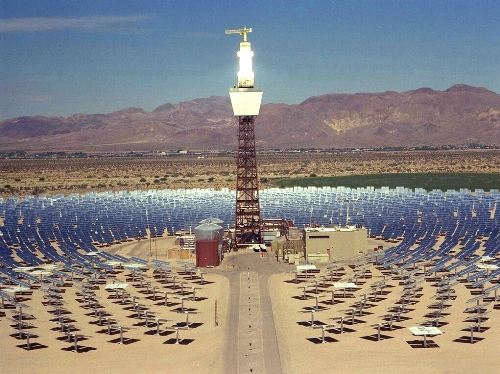
As I said, solar thermal also be used to generate electricity. This is done by building a tower on top of which there is a giant tank of water around the tower are placed thousands of mirrors that face the tank so the water is heated and evaporates, the vapor is forced to pass through turbines to generate electricity. At night the water condenses and fills the tank so the next day re-generate clean electric power.
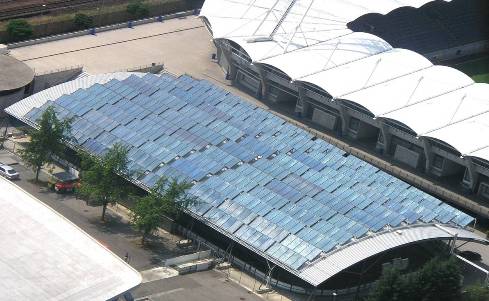 The manufacture of these cells is a really expensive process, both financially and in time. Although the material they are made (silicon) is very abundant in the Earth, its processing is laborious and complicated special processes are required to produce silicon ingots, which are subsequently cut cells, which is why still an expensive product. Currently are preparing other materials of higher performance.
 great divide In a first photovoltaic systems can be classified into two groups:
- facilities isolated from the mains.
- facilities connected to the mains. Facilities
The electric current generated by a PV system can be fed into the mains as if a central electric power production. Electricity consumption is independent of the power generated by photovoltaic panels, the user is buying the electric power consumed by a distribution company at a set price and also owns a generating facility. This type of applications is growing thanks to the sale price to the primacy of network kWh, the purchase price to the utility is, by the year 2009 of € 0.34 per kWh for installations under 20 kW on deck and € 0.32 per kWh for over facilities on land and on deck, and instead buying power of about € 0.08 per kWh. In addition, another advantage is that utilities are forced to buy the energy produced. Here
a simulator to see how much you could sell the kWh depending on the position and orientation of the house.
energy simulator
sale
Some applications of these systems are as follows:
- Facilities roofs, terraces, etc. of households have connection to the electrical distribution network: It takes the roof surface to place easy to install modular systems.
- production plants: They are industrial-strength applications that can be installed in rural areas not utilized for other uses ("solar farms", "cooperative energetic") or overlapping in large covered areas (parks, shopping areas, etc.).
- building integration: This involves the replacement of conventional architectural elements for new architectural features including photovoltaic element, and thus are energy generators (cladding, curtain walls, sunshades, pergolas, etc.).
- All the energy produced by a photovoltaic system is injected into the network to a favorable selling price, regardless of the electricity consumed
off-grid installations electric
These facilities are mainly used in those locations where there is no access to the grid and is more economical install a photovoltaic system to build a line between the network and the point of consumption. The electricity generated goes to consumption.
The main applications are isolated systems:
- Electrification of houses and buildings, mainly for lighting and low power appliances
- Public Lighting Applications
- agricultural and livestock water pumping and treatment - Antennas isolated telephony network signaling and communication


0 comments:
Post a Comment